Vital Signs: Jim Clyburn, 33 Years, and a District That Deserves a New Pulse

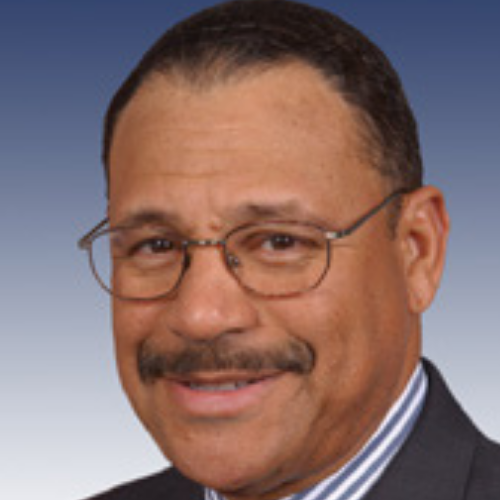
He built a genuine legacy. The district has a 20% poverty rate. He watched his colleagues step aside. Then he filed for an 18th term at 85. And when asked if this would be his last, he called it an open question.
There is a version of American politics where seniority and tenure are the whole story. Where thirty-three years in Congress is proof of dedication. Where holding a seat is the same thing as serving the people who live in it. SC-6 has been running that version for three decades. It is worth asking what the district got in return.
Not what Jim Clyburn got. Not what the Democratic Party got. What did the people of Florence and Orangeburg and the communities along the I-95 corridor get?
That question has a real answer. It is more complicated than either his supporters or his critics want to admit.
WHAT 33 YEARS ACTUALLY PRODUCED
Start with the credit, because it is real.
Clyburn's signature legislative achievement is the 10-20-30 formula, a provision directing at least 10 percent of federal program funding to counties where 20 percent or more of the population has lived below the poverty line for 30 years or more. Inserted into the 2009 Recovery Act and later applied to dozens of federal appropriations accounts, it has directed billions to roughly 400 persistently poor counties across the country, from Appalachian communities in Kentucky and West Virginia to Native American communities in South Dakota to rural pockets of the Deep South.
In SC-6 specifically, it helped fund the Lake Marion Regional Water Agency, bringing potable water to much of the district for the first time, 51 miles of water lines in Britton's Neck in Marion County, rural broadband, and community health centers.He also authored legislation creating the Congaree National Park and establishing the Gullah/Geechee Cultural Heritage Corridor, two wins for South Carolina's history and environment that will outlast any individual Congress member.
These are not nothing. Water lines matter. Broadband matters. A national park matters. Credit where it is due. The credit is real. So is what follows.
SC-6 today has a median household income of $53,986, well below the national median of $74,580. The poverty rate stands at nearly 20%, almost double the national average of 12.5%. The district is home to what local educators and journalists have long called the Corridor of Shame along Interstate 95: communities marked by crumbling schools, failing infrastructure, and poverty rates that have persisted across generations.
Clyburn has served on the Appropriations Committee through multiple Democratic majorities, through infrastructure packages and COVID relief bills, through every major federal spending fight of the last thirty-three years. The water lines got built. The poverty did not move.
That is not a verdict on his intent. It is an observation about outcomes. And in a democracy, outcomes are what accountability is supposed to measure.
After 33 years on Appropriations, SC-6 has a poverty rate nearly double the national average. The district deserves to ask why. |
THE ANNOUNCEMENT. THEN THE RESPONSE.
On March 12, 2026, Clyburn announced he is running for an 18th term. He is 85 years old. He told reporters he is "very well equipped and healthy enough" to serve another two years. He said he would be "less than human" not to consider the calls for generational change. He acknowledged watching Nancy Pelosi and Steny Hoyer, who served alongside him in the top three of House Democratic leadership for fifteen years, both step aside. Then he filed.
When asked whether this 18th term would be his last, Clyburn called that an open question. Read that twice. He is not promising a farewell tour. He is not clearing a path. At 85, filing for what may not be his final term, he is asking SC-6 to give him another two years and then see.
Social media responded to the announcement within hours. The criticism did not come from Republicans. It came from Democrats.
Amanda Litman, co-founder of the progressive PAC Run for Something, was direct: "This selfish decision does such a disservice to his district, to the Democratic Party, and to the country." She added: "There is an incredible bench of leaders in his community who could take the baton. I hope one or many of them primary him and make him defend this choice."
When a Democratic strategist whose entire professional purpose is electing Democrats uses the word selfish in public, that is not a political attack. That is a verdict from inside the coalition.
BOTH PARTIES BUILT THIS MACHINE
Here is something neither party wants said out loud: protecting entrenched senior members is a bipartisan institutional project. It is not a Democratic problem or a Republican problem. It is a structural feature of Congress, built over decades by both parties for the same self-interested reason.
Seniority determines committee assignments. Committee assignments determine power. Power determines who controls funding, legislation, and the institutional machinery that keeps incumbents in place. Party establishments on both sides actively shield their senior members from primary challenges because a successful primary challenge disrupts the seniority ladder for everyone in the queue. A strong challenger in SC-6 is not just a threat to Jim Clyburn. It is a threat to an orderly progression of power that both parties depend on.
This is why national party organizations rarely support primary challengers to sitting members. It is why potential candidates get quiet pressure not to run. It is why Alexandria Ocasio-Cortez's attempt to claim a committee ranking position was beaten back by senior Democrats protecting the seniority queue. The machine protects itself regardless of which party is running it.
Clyburn has offered one concrete argument for staying: if Democrats retake the House in 2026, he would be positioned to work alongside Hakeem Jeffries as the first Black Speaker. That is a real argument. It is also, on close inspection, an argument about what Jim Clyburn wants to experience, not about what SC-6 needs from its representative. A younger member from the same district could serve alongside Jeffries for decades. Clyburn, by his own account, is taking it one term at a time.
|
THE RECORD, PLAINLY STATED
In early 2024, Clyburn stepped down as Assistant Democratic Leader, the No. 3 position in the House Democratic caucus he held since 2011. He now serves as Ranking Member on the Appropriations Subcommittee on Transportation, Housing and Urban Development. That is a subcommittee post, not a full committee leadership role.
During the 118th Congress, he introduced fewer bills than any other member of the South Carolina congressional delegation. Over 33 years, 12 bills he sponsored have been enacted into law. His lifetime missed-vote rate is 3.5%, above the chamber median of 2.1%.
His campaign has $1.5 million in cash on hand. In a D+13 district where the primary is the election, that financial wall alone is enough to freeze the field before a single vote is cast.
And there is a harder number that sits behind all of these. At 85, the actuarial risk of a serious health event is not a political talking point. It is a statistical reality. A mid-term vacancy, for any reason, would leave SC-6 without effective representation during the period when Clyburn argues his seniority on the Transportation subcommittee matters most for the district. The argument for staying depends on being there. That is not guaranteed for any 85-year-old, regardless of how well-equipped and healthy they feel today.
THE REDISTRICTING DEBACLE
In May 2023, ProPublica published an investigation with a specific finding: a Clyburn aide named Dalton Tresvant secretly delivered a hand-drawn map to South Carolina Republicans during the 2021 post-census redistricting process. The map added Black voters to Clyburn's district and removed Republican-leaning precincts from surrounding ones. The outcome, according to analysts cited in the report, left South Carolina Democrats with virtually no path to winning any other congressional seat in the state.
Clyburn denied involvement. The downstream damage was structural regardless. A three-judge federal panel found the redrawn 1st Congressional District was an illegal racial gerrymander, noting that recommendations from Clyburn's office influenced those lines. The Supreme Court ruled for the state in 2024. No formal ethics investigation of Clyburn has been opened.
What the record shows is a seat made safer for one member at the direct expense of competitive Democratic politics everywhere else in South Carolina. SC-6 got more secure. The rest of the state got redder. The trade served one person's electoral position. The party paid for it statewide.
THE FELLOWSHIP THAT BEARS HIS NAME
In 2016, then-SCDP Chair Jaime Harrison created the South Carolina Democratic Party's James E. Clyburn Political Fellowship. The program was named in Clyburn's honor. It has now run nine classes, training scores of young South Carolinians in campaign strategy, party leadership, and political organizing. Alumni serve in the state General Assembly, on city and county councils, and in party leadership roles across the state.
The fellowship exists for one explicitly stated purpose: to develop the next generation of Democratic leaders in South Carolina. That is its mission, in its own words. The people who built it, named it after Jim Clyburn, and have run it for nearly a decade believe the state has a deep bench of future leaders ready to carry the work forward.
If the program named after him has spent nine years developing South Carolina's next generation of Democratic leaders, why is one of those leaders not running for his seat right now?"
A program named in his honor has spent nine years training South Carolina's next generation of Democratic leaders. The seat they were built to eventually fill is right there. |
Either those leaders are ready, and the moment is now, or something is standing in the way. That something has $1.5 million in his campaign account and just filed for an 18th term.
THE SEAT IS NOT A FAMILY HEIRLOOM
When Clyburn eventually retires, he has made clear who he thinks should replace him. Multiple news organizations, including the Washington Post, report that he has named his daughter, Jennifer Clyburn Reed, as his preferred successor.
Congressional seats are not inherited. They are not passed from parent to child like a family business. The voters of SC-6 should choose who represents them next, not receive a handoff from a retiring incumbent to his own daughter. That is not succession. That is a dynasty.
THE CONVERSATION WE ALWAYS HAVE TOO LATE
Ruth Bader Ginsburg was one of the most consequential jurists in American history. Her opinions shaped the legal landscape of gender equality for a generation. She is revered, and deservedly so.
She is also the clearest example in modern American political life of a brilliant person who held on too long and may have cost that equality she devoted her life to a generation of progress. She declined to retire when Barack Obama had a Senate majority and could have replaced her. She died in office in September 2020. Mitch McConnell refused to seat a justice before the next election and the consequences are still unfolding across every major civil rights issue in the country.
Here is what is true about how we talk about Ruth Bader Ginsburg now: you cannot have the conversation about her legacy without having the conversation about her exit. The two things are permanently fused. Her decision to stay is part of her story whether she wanted it there or not.
Jim Clyburn still has time to write a different ending. He can end his career as the man who built something real, knew when to hand it off, and trusted the next generation to carry it. That is a legacy. The alternative is becoming the next entry in a conversation Democrats have quietly been having for years about brilliant people who could not let go.
You cannot have the conversation about RBG's legacy without having the conversation about her exit. Jim Clyburn still has time to write a different ending. |
WHAT COMES NEXT
South Carolina is not short of Democratic talent. Bakari Sellers has built a national profile. Jaime Harrison, who created the fellowship that bears Clyburn's name, ran the most expensive Senate race in state history and chaired the DNC. Todd Rutherford has spent years building relationships in the state legislature. These are people with real records and real reasons to want this seat.
Note that Harrison publicly told the SC Daily Gazette that Clyburn should run again, calling him someone the party "desperately needs." That is the machine at work. Potential successors do not challenge the incumbent. They audition for his eventual blessing. They need his network when he finally goes. So they say supportive things in public and wait.
What generational change looks like in SC-6 is not a dynastic replacement. It is a fresh start, a representative who has to make the case to voters rather than inherit a seat, and who knows the district can choose someone else if the case stops being made.That person may well be a Clyburn fellow. The program that bears his name trained them for exactly this. The seat is there. The window is open.
TO THE SOUTH CAROLINIAN WHO IS THINKING ABOUT IT
This section is not for the general reader. It is for one specific person who has been turning this over and has not yet decided.
You know the district. You have walked the corridor. You know what Florence County needs and what Orangeburg has been waiting for. You have thought about what representation with a long runway could accomplish in communities that have been told for decades that their senior member's seniority is the answer.
You have probably told yourself the timing is wrong. The incumbent is too entrenched. The money gap is too wide. The party will not back you. All of those things are true in a normal year. The online response to the March 12 announcement was not a normal response. The people who usually protect incumbents quietly are being asked publicly to explain why.
The filing window opens March 16 and closes March 30. After that date, the decision is made for another two years. The district is D+13. The primary is the election. You do not need to beat Jim Clyburn everywhere. You need to make the case that SC-6 deserves a choice.
The window is open in a way it rarely is. The response to the March 12 announcement made that clear. Someone just has to walk through it. |
THE SEAT BELONGS TO SOUTH CAROLINA
Jim Clyburn earned his legacy. The civil rights work, the Biden endorsement, the water lines in Britton's Neck, the Lake Marion water agency, the Congaree National Park: none of that is diminished by this argument. Great careers and accountability are not opposites.
A program named in his honor has spent nine years training the next generation of Democratic leaders in this state because the people around him believed the work would outlast him. The investment is mature. The fellows are in place. The question is whether the seat will open in a way that lets South Carolinians choose, or whether it will remain on one man's timeline until the choice is made for them.
READY TO BACK A CHALLENGER IN SC-6? Pledge Your Support Now SC-6 Primary Filing Deadline | March 30, 2026 SC-6 Democratic Primary | June 9, 2026 |

Comments