Rep. Richard Neal Scores 53/100: Democracy on Life Support in Tocqueville's America

In 1831, a young French political philosopher named Alexis de Tocqueville traveled through New England on a nine-month journey across the United States. His official mission was to study American prisons. His real interest was larger: he wanted to understand what a functioning democracy looked like from the inside. What he found in the Massachusetts townships answered that question more completely than he expected. Citizens who showed up. Representatives who answered to them. Accountability that was not theoretical but practiced, face to face, in public rooms. The purest expression of democratic self-governance he had ever seen.
He wrote about it at length in “Democracy in America,” the book that would become one of the most celebrated analyses of representative government ever written. “Town meetings are to liberty,” he observed, “what primary schools are to science; they bring it within the people’s reach, they teach men how to use and how to enjoy it.”
That was western Massachusetts. That was this congressional district.
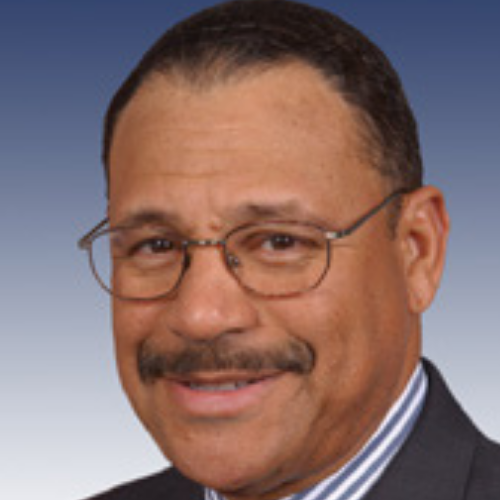
Today, the congressman representing that same stretch of the state scores 53/100 on the Congressional Vitality Index: LIFE SUPPORT. Full methodology at dnrcongress.com/methodology.
Thirty-Seven Years. Nineteen Terms. Still Counting.
Tocqueville made one prediction about democratic corruption that turned out to be wrong. He argued that the self-correcting mechanism of elections would keep corruption in check: a corrupt official serves a short term, gets voted out, and the rot doesn’t spread. “Corruption and incapacity,” he wrote, “do not act as common interests which may connect men permanently with one another.” He believed democracy’s churn would prevent the kind of entrenched, multigenerational self-dealing he associated with aristocratic systems.
Rep. Richard Neal has spent 37 years proving that prediction incomplete.
Neal was first elected in 1988, when George H.W. Bush had just been elected and the Berlin Wall was still standing. Before Congress, his career ran almost entirely through public life: a high school teacher in Springfield, then a city councilor, then mayor, then 37 years in Washington. He has never worked in a corporate or business capacity. In 2024, he ran against Nadia Milleron, an independent attorney who campaigned with approximately $43,000 against Neal’s $3.9 million war chest. She pulled 37.4% of the vote. Neal called it an “overwhelming margin.”
Tocqueville had a phrase for elections that produce predetermined outcomes. He wrote that, in systems where power is never truly contested, the people “shake off their state of dependence just long enough to select their master, and then relapse into it again.”
The Son, the Lobbyists, and the One Committee That Writes the Tax Code
Here is where Neal departs most sharply from what Tocqueville thought democratic accountability would prevent.
In 2020, one year after Neal became Chairman of the House Ways and Means Committee, the only committee in Congress with authority to write federal tax law, his son Brendan launched a one-person lobbying firm: Brendan Neal Strategies. According to Politico’s investigation, clients of that firm included lobbyists with active tax-related matters before his father’s committee. Neal’s campaign also paid Brendan’s firm $196,340 in consulting fees since 2020.
Ethics experts quoted by Politico were not circumspect. Morris Pearl of Patriotic Millionaires said the arrangement “reeks of corruption.” A legal ethics professor at Washington University raised the question of whether the campaign payments represented a “slush fund to benefit his family member.” A former chief White House ethics lawyer said it plainly: “K Street’s always been looking at Ways and Means. I wouldn’t let a lobbyist pay my son a lot of money and then have them come lobby the committee.”
Neal's office says his son has never lobbied the committee and that the congressman was unaware his son's clients had business before it. No formal ethics investigation is currently open. "Not illegal" is not the same thing as "nothing to see here." Draw your own conclusions.
Tocqueville believed this kind of arrangement, corruption flowing along family lines and connecting interests across generations, was what separated aristocratic governance from democratic governance. He thought democracy would structurally prevent it. In the First District of Massachusetts, it just needed a tax committee chairmanship and a quiet son with a one-man firm to route around that assumption entirely.
He Killed a Patient Protection Bill, Then Cashed the Check
In 2019, a bipartisan coalition struck a deal to cap surprise medical billing, the practice of patients receiving enormous out-of-network charges at hospitals that accept their insurance. Neal, as Ways and Means Chairman, blocked it with a last-minute counterproposal that closely mirrored what hospital industry groups wanted.
In the weeks that followed, Neal received $54,000 from lobbyists representing the private equity and pharmaceutical interests that had opposed the original legislation. His campaign’s top donor that cycle was Blackstone Group, which owned physician staffing company TeamHealth, a direct beneficiary of the surprise billing status quo. The American Hospital Association spent over $200,000 on digital ads supporting Neal’s reelection while all of this was happening.
Western Massachusetts has a documented shortage of healthcare providers. Residents wait four to six months for routine appointments. Nobody has drawn a straight line between those two facts in public.
Tocqueville wrote that the soft corruption of democratic governance does not announce itself. It does not break wills. It redirects outcomes quietly, through the right committee chairmanships, at the right moments, for the right donors.
The District That Only Part of Him Showed Up For
Tocqueville’s deepest admiration for New England democracy was specific. He did not celebrate distant representation or the delivery of federal funds from Washington. He celebrated proximity. Presence. The representative who answered to constituents because those constituents could find him.
“The native of New England,” he wrote, “is attached to his township because it is independent and free: his co-operation in its affairs ensures his attachment to its interest.”
According to WAMC, Neal has not held a public town hall in Berkshire County since 2017. His campaign did not respond when asked whether he planned to hold one before the 2026 election.
He has missed 5.0% of roll call votes over his career. The House median is 2.1%. The man has not shown up for his district in a town hall since 2017, and he has missed votes at twice the rate of his peers. Safe seats have a way of making both feel consequence-free.
He ran his 2024 campaign through press conferences about federal funding he had secured, while declining to acknowledge that his opponent existed. His challenger Jeromie Whalen pointed to a harder number: “Whenever I hear that Richard Neal has brought money into the district, I immediately remind people that we have just lost $47 million for public schools in Springfield.”
The Underlying ConditionTocqueville spent considerable effort in Volume 2 of “Democracy in America” trying to name something he had seen coming. He did not call it corruption exactly. He called it a new kind of “soft despotism,” a condition in which power does not tyrannize citizens outright but instead quietly encompasses them. He described it as a tutelary authority that “does not break wills, but softens them, bends them, and directs them. It rarely forces action, but it constantly opposes your acting. It does not destroy; it prevents birth. It does not tyrannize; it hinders, it represses, it enervates, it extinguishes, it stupifies.” He predicted this condition would retain “some of the external forms of liberty” while draining liberty of its substance. Elections would still happen. Candidates would still run. The machinery of democracy would remain intact and largely ceremonial. What would disappear is the accountability that makes the machinery mean something. A $4 million campaign account held by a 37-year incumbent in a district with no Republican opposition, facing three underfunded primary challengers, is not democracy in crisis. It is democracy successfully managed into irrelevance. The township meetings Tocqueville celebrated in western Massachusetts were built on the premise that the representative had to face the people. What Neal has built, over 19 terms and three decades of corporate PAC fundraising, is a system where he does not have to. “Everybody feels the evil,” Tocqueville wrote, “but no one has courage or energy enough to seek the cure.” That was 1840. The First District primary is September 1, 2026. |
There’s Finally a Real Primary
Tocqueville wrote that the New Englander who is most valuable to democracy is the one who “practices the art of government in the small sphere within his reach,” who is embedded in community, who has something to lose and something to fight for, and who has not yet learned to treat political power as a personal possession.
Jeromie Whalen is a high school teacher from South Hadley who grew up in Belchertown and has spent more than a decade teaching communications and media production at Northampton High School. He holds three degrees from UMass Amherst, including a PhD completed in 2024. He is 38 years old, literally half of Neal’s age. He is refusing all corporate money.
The Boston Herald covered his entry into the race in February 2026. He put his campaign’s argument plainly:
“I’m coming from outside the traditional political world, and I think that’s exactly what we need right now. Old-school establishment thinking and the corporate greed that has seeped into our campaign finance system have pushed this country in the wrong direction. The way forward is electing real people from our communities who are not tied to those entrenched systems and who will actually fight for the policies we need to create change.”
The fundraising gap is severe. Neal closed 2025 with approximately $4 million; Whalen had around $18,000. But in 2024, when Nadia Milleron ran against Neal with $43,000, no party, and no institutional backing, and still pulled more than a third of the district’s votes. The voters for this kind of race already exist. The question is organization and turnout, not persuasion.
Tocqueville thought western Massachusetts had already answered the question of what democracy was supposed to look like. A schoolteacher who shows up for his community and refuses corporate money is not a long shot. Everything Tocqueville said a democratic representative should be, Whalen is. The description is 190 years old.
The Diagnosis Is In
Thirty-seven years. Nineteen terms. A son’s lobbying firm. A killed patient protection bill followed by $54,000 from the opposing lobby. A county constituency that hasn’t seen its congressman in a public meeting since 2017. A missed vote rate above the House median.
Rep. Richard Neal Scores 53/100: Life Support
Tocqueville found something worth writing about in Massachusetts nearly two centuries ago. It was the idea that democracy only survives when representatives remain answerable to the people they serve.
The primary is September 1, 2026. Take the DNR Congress pledge and help western Massachusetts reclaim the kind of accountability that once made it the most studied democracy in the world.
Comments